Mount Vernon had been sitting on my bucket list for as long as I can remember. It feels like you cannot hear a single
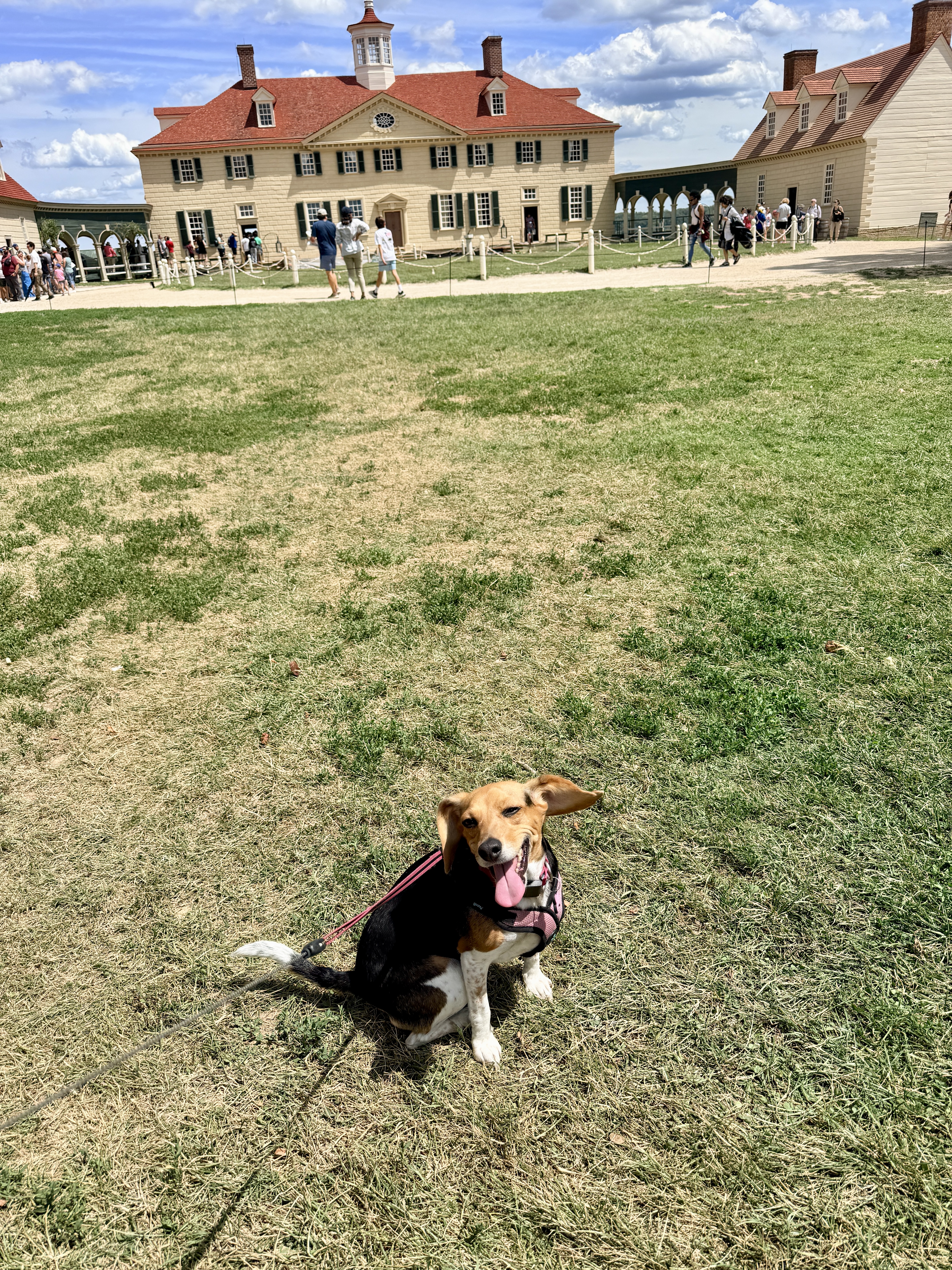
story about George Washington without someone bringing up his home on the Potomac, so a standalone day to finally walk the grounds felt necessary. We left Wild Blue Yonder parked at Cherry Hill Park and took the truck south, and for this one we brought Juneaux along for the whole day.
Everything we read ahead of time said the estate welcomed dogs, and that turned out to be true. Juneaux was allowed across almost the entire property, and more than one staff member lit up when they saw her and slipped her a treat, so it was clear the place was set up to have four-legged visitors. The only spots that were off limits to her were the inside of the mansion and a portion of the museum. If I am being fair to myself, that is also the one thing I would change. With Juneaux on the leash, we passed on the mansion interior and moved a little quicker through the indoor exhibits than I wanted to. Next time I think I would leave her back at camp with Donna for a few hours so I could take my time inside.
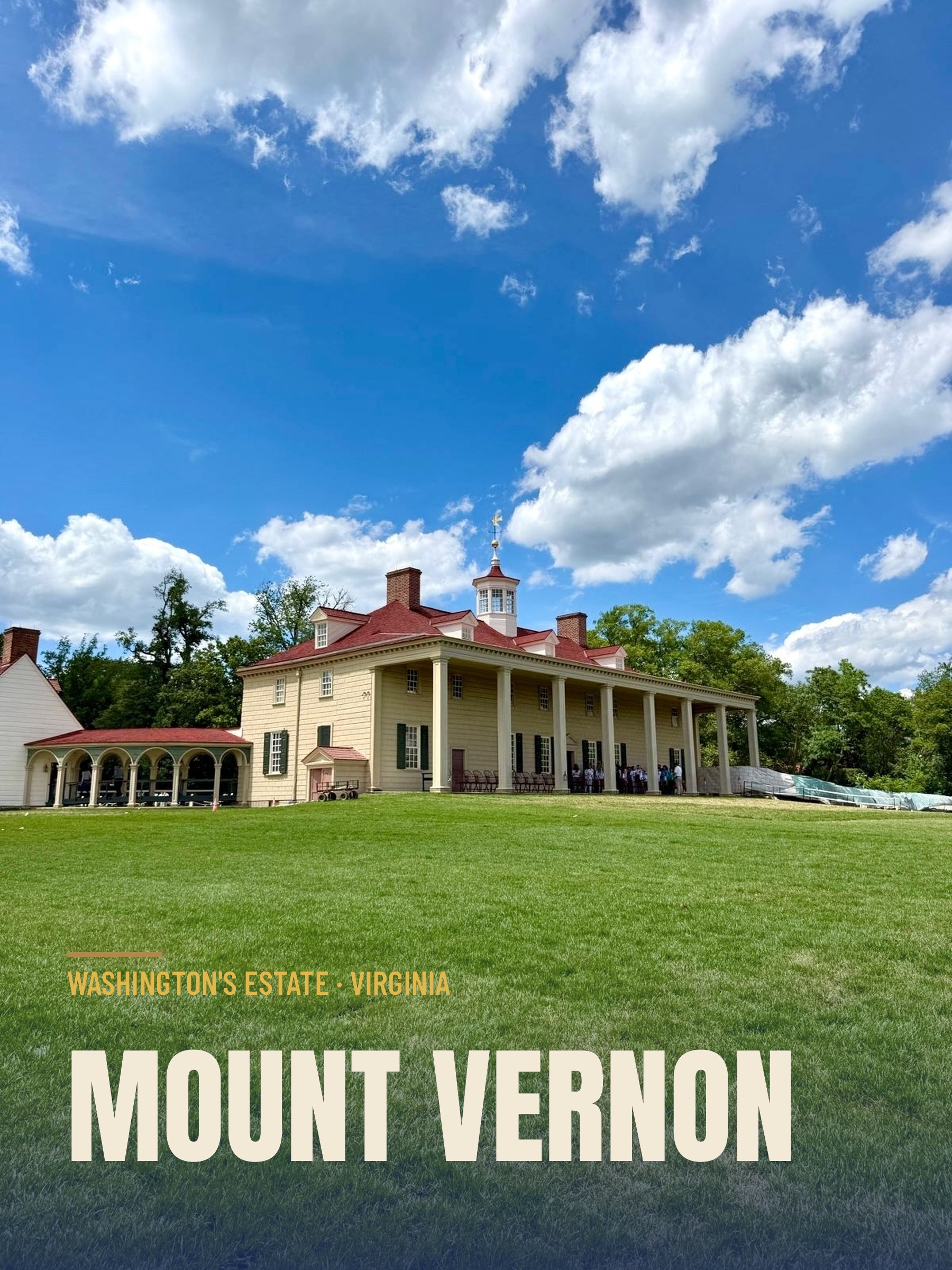
We did not tour the inside of the mansion on this visit. The line was long, we had the dog, and I have walked through enough historic homes over the years to picture what was waiting on the other side of the door. What I did not want to
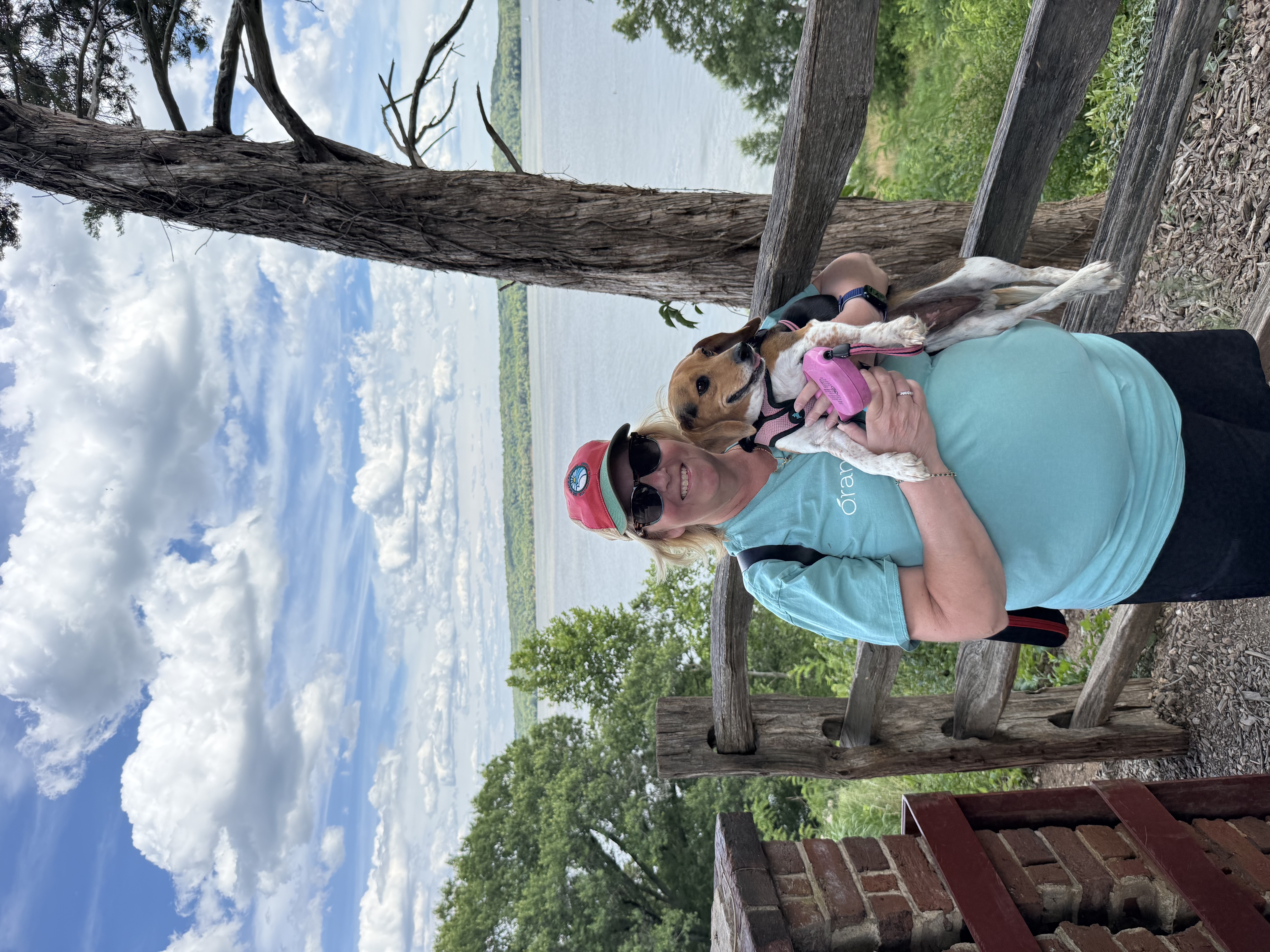
miss was the piazza, the long covered porch that runs the full length of the house and looks out over the river. Washington designed it himself, and standing there with the Potomac stretched out below, it is easy to understand why he wrote that no estate in United America was more pleasantly situated than this one. The man clearly loved this piece of ground.
The story of how Washington came to own the place is more tangled than I expected. His father built the original house, and the estate passed to George's older half-brother Lawrence, who renamed it Mount Vernon after a British admiral he had served under. When Lawrence died in 1752, his will left the property to his widow for her lifetime, with the remainder eventually coming to George. George began leasing Mount Vernon from his brother's widow in 1754, and when she died in 1761 he finally became the sole owner. The home that defines Washington in the public imagination was something he waited years to truly call his own.
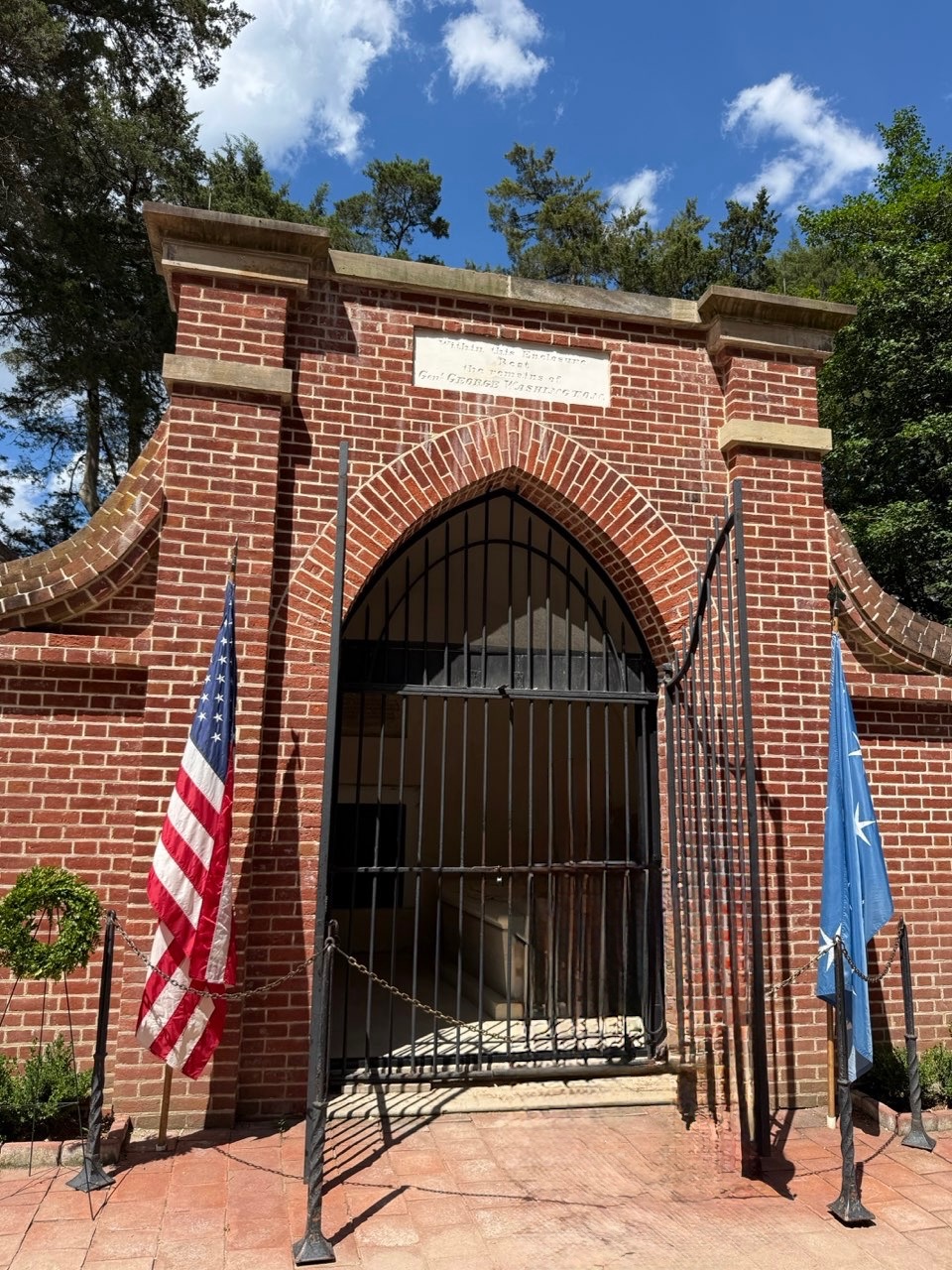
We walked over to the tomb, which sits on a quiet wooded rise on the estate. Washington left instructions in his will for a new brick tomb to be built, because the old family vault had fallen into disrepair. That new tomb was not finished until 1831, and that is when his remains and Martha's were moved into the enclosure where they rest today.
The grounds themselves are worth the trip on their own. The gardens are laid out the way an eighteenth-century working estate would have kept them, Down toward the river they keep a working pioneer farm going, with livestock and demonstrations meant to show visitors how the land actually operated in Washington's day.
I had wanted to see the working gristmill and the distillery, and this is where our Friday tripped us up. Both of those only run on weekends during the summer months, so we found them closed. Even so, the history of Washington as one of the largest whiskey producers in the early country is too good an angle to pass up. It is on the list for a return visit, ideally on a Saturday.
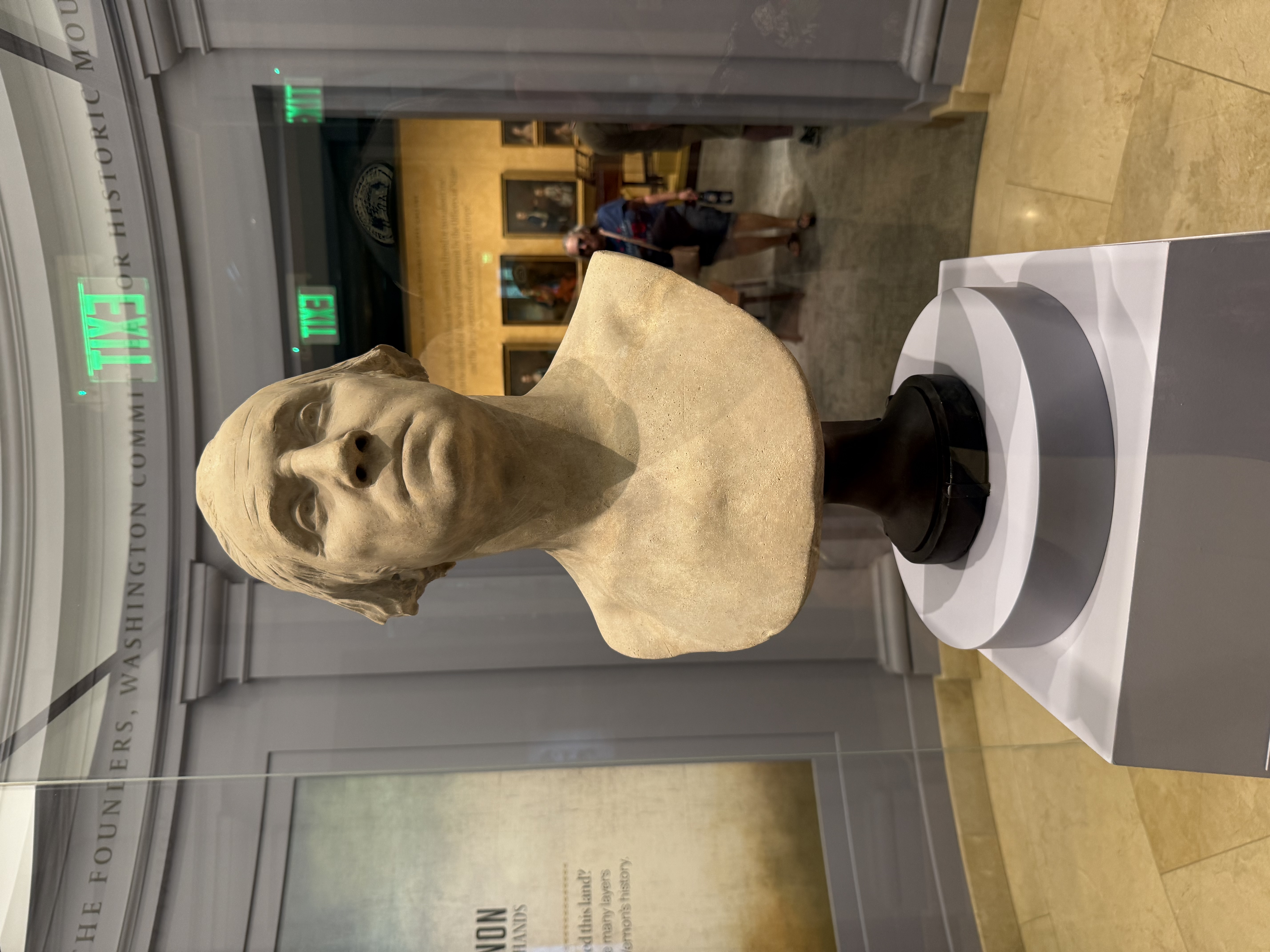
The museum was the one stretch of the day I had to take on my own, since Juneaux was not allowed inside. I am glad I made time for it, because it was the most extensive piece of the entire estate. The galleries fill twenty-three rooms and theaters and hold more than seven hundred objects, from Washington's personal belongings to manuscripts, maps, and portraits, and they carry you through his whole life from a young surveyor to the command of the Continental Army to the presidency and his final days. I moved through all of it quicker than I wanted to, and another hour or two still would not have been enough. The one item that struck me the most was the bust of George Washington sculpted in 1785 by renowned French artist Jean-Antoine Houdon during a two-week visit to Mount Vernon. It is widely regarded as the most accurate likeness to George Washington ever created. It is the clearest reason on my list to come back. Juneaux got her fill of new smells, we got our fill of river and history, and we drove back to Cherry Hill Park.
Gallery
Check out our other posts about this stop:
- Washington, DC: The Bucket List You Can't Finish in a Week
- Cherry Hill Park: A Capital Basecamp on a Family Farm
- Goosebumps in the Gallery: A Day with Two Branches of Government
- Big Marble and a Quiet Hill: The Mall Monuments and Arlington
- The C&O Canal and the Streets of Georgetown
- Just a Long Fly Ball from Camden Yards: Where the Sultan of Swat Began
- Crab Cakes and Meatballs: A Day Around Baltimore's Harbor
- Harpers Ferry: Rivers, Rifles, and Rebellion